

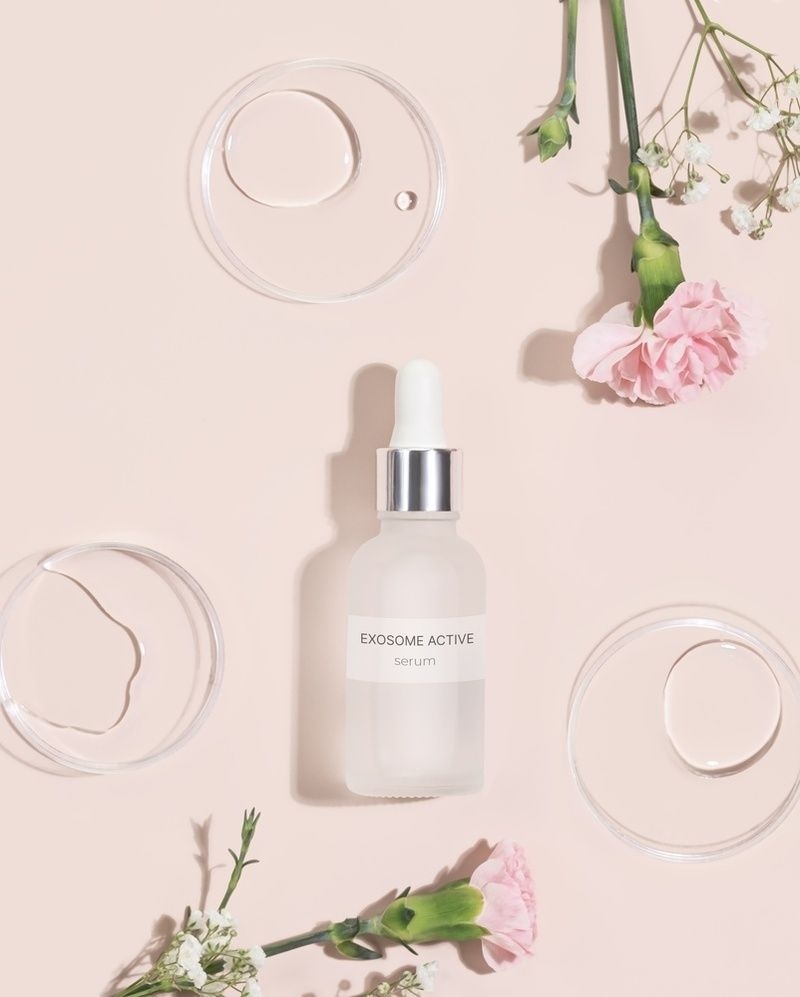
Skincare loves a buzzword. Sometimes it earns the hype. Sometimes it absolutely does not. Right now, one of the biggest words floating around clinics, treatment menus, and glossy beauty conversations is “exosomes in skincare.”
And the pitch is pretty tempting. Better healing. Better glow. Better texture. Maybe firmer-looking skin too. Some brands and clinics even frame exosomes as the next big thing in regenerative aesthetics, which is why people keep asking the same question: is this finally the growth factor alternative to Botox?
That is where things get interesting.
Because exosomes and Botox are not really doing the same job. Botox works by relaxing certain facial muscles to soften dynamic wrinkles. Exosomes are being explored more for signaling, repair support, inflammation control, and skin quality. So the real comparison is less “replacement” and more “different lane.” Early reviews in dermatology say exosomes show promise for skin rejuvenation, wound healing, and recovery, but they also stress that the clinical evidence is still limited and safety questions are not fully settled. The FDA has also warned consumers about unapproved exosome products.
So no, this is not a simple Botox swap. But it is worth understanding.
Part of the excitement comes from the idea of helping skin behave better, not just look tighter for a while. That is a big emotional sell. People are tired of miracle language, sure, but they still want treatments that feel smart and modern.
Exosomes fit that story neatly. They are tiny extracellular vesicles that cells use to communicate. In skin research, they are being studied because they may help send signals linked to repair, collagen support, and inflammation response. Reviews published in dermatology journals describe possible uses in skin rejuvenation, scar care, photodamage, pigment issues, and hair restoration, though most experts still point out that stronger clinical data is needed before big claims should be taken at face value.
That is why the category feels exciting. It sounds scientific, a little futuristic, and less frozen-faced than Botox. For some patients, that alone makes them curious.
So, what are exosomes in plain English?
Think of them as tiny messengers. Cells release them, and those little particles carry signals like proteins, lipids, and bits of genetic material that can influence how other cells respond. In skincare and aesthetic medicine, the theory is that these signals may encourage skin to recover better, calm irritation, and support smoother, healthier-looking tissue.
That sounds impressive because, well, it is. At least conceptually.
But concept and outcome are not the same thing. A product can have a strong biological idea behind it and still end up inconsistent in the real world. That is one reason exosomes remain such a debated category. There is genuine interest. There is also real caution.
In practice, exosomes are usually discussed alongside procedures rather than as a basic moisturizer substitute. They may be applied after treatments like microneedling or lasers, where the goal is often to support recovery and improve overall skin appearance. Some clinics also market topical exosome products for post-procedure use or general rejuvenation. Reviews of topical exosomes note that they are being studied for noninvasive skin rejuvenation, but they also say neither topical exosomes nor similar peptide therapies are FDA-approved for that purpose.
That matters. A lot.
Because when patients hear “advanced skincare,” they may picture a polished, fully established treatment category. In reality, the field is still evolving, product quality is not uniform, and regulation has not caught up with the marketing energy around it.
That does not mean everything is fake. It means people should slow down and ask better questions.
This is probably the most important section in the whole piece.
Botox targets muscle movement. That is why it is used for expression lines like crow’s feet, forehead lines, and frown lines. It works by temporarily reducing the muscle activity that causes those wrinkles.
Exosomes are being studied for something else. Skin quality. Healing support. Inflammation modulation. Possibly collagen-related effects. That means exosomes may be more relevant to texture, recovery, glow, or overall skin appearance than to muscle-driven wrinkle reduction. Current dermatology reviews describe promise in anti-aging and rejuvenation settings, but they do not position exosomes as a proven one-to-one substitute for botulinum toxin.
So if someone wants softer frown lines caused by repeated facial movement, Botox is still Botox.
If someone wants better-looking skin quality after a procedure, smoother texture, or a more regenerative-style approach, exosome skincare conversations may make more sense there.
Different goal. Different mechanism. Different expectations.
Don’t Miss Out: Skincare Ingredients Guide for Beginners to Get More Glow
This is the part that keeps exosomes in the conversation.
The strongest interest seems to be around recovery support and skin rejuvenation. Reviews and systematic analyses suggest exosome-based therapies may improve hydration, texture, elasticity, pigmentation appearance, and wrinkle depth in some studies. But those same reviews also keep repeating an important point: the evidence base is still developing, studies are often small or inconsistent, and treatment protocols are not standardized yet.
That is not a dealbreaker. It is just reality.
A person considering exosomes should probably think of them as experimental-leaning or early-stage in aesthetic medicine, not as a fully settled, gold-standard anti-aging treatment. That framing is less flashy, yes. It is also more honest.
Now the hard question: Are exosomes safe for skin?
The careful answer is that safety is not fully settled, and it depends heavily on the source, manufacturing quality, intended use, and whether the product is actually approved for what it is being marketed to do. The FDA has repeatedly warned consumers about unapproved regenerative medicine products, including exosome products, and has linked some unapproved uses to serious adverse events. Dermatology reviews also raise concerns about infection risk, inflammatory reactions, product inconsistency, and theoretical concerns related to malignancy or immune response.
So the answer is not a clean yes.
That does not mean every exosome treatment is dangerous. It means safety cannot be assumed just because the branding looks premium or the clinic says the treatment is cutting-edge. Those are not the same as strong regulatory backing.
This is where common sense needs to show up.
Before anyone says yes to an exosome treatment, they should ask what exactly is being used, where it comes from, what evidence supports that specific product, whether it is being used topically or with a procedure, and what side effects have been seen in actual patients.
They should also ask who is performing the treatment. A board-certified dermatologist or qualified medical professional is far more likely to explain the limits clearly instead of pitching fantasy.
And maybe most importantly, they should ask what result they are actually chasing. Fewer expression lines? Better texture? Faster recovery after microneedling? Post-laser support? Those are not interchangeable goals.
That is where the second wave of what are exosomes questions usually becomes more useful than the first. Once people move past the trend label, they start asking whether the treatment fits their skin, their goals, and their risk tolerance. Much better question.
On a Similar Note: Can Stress Acne Be Treated Effectively Long-Term Naturally?
Kind of, but not really. That is the honest version.
If the phrase “alternative to Botox” means a treatment that replaces the wrinkle-relaxing role of Botox, then no. Exosomes are not that. Botox still has a very specific, well-established job.
If the phrase means a different category of treatment aimed at skin quality, tissue signaling, and post-procedure support, then yes, exosomes may be part of that broader conversation. Research interest is real. The regenerative angle is real. The potential is real enough to keep dermatology paying attention. But the evidence and regulation are still catching up, and that gap matters.
That is probably the fairest takeaway. For now, exosomes in skincare look more like an emerging adjunct than a direct Botox replacement. Promising? Yes. Proven across the board? Not yet.
And honestly, skincare gets a lot easier to understand when people stop forcing every new thing into a “the next Botox” headline.
Yes, they are often discussed alongside treatments like microneedling, lasers, and other rejuvenation procedures. The key issue is not just combining them, but whether the clinician has a clear reason for doing so and can explain the product being used.
Results are usually not described as instant in the way some injectable wrinkle treatments can be. If a person notices improvement, it may show up gradually as skin recovery, tone, or texture changes over time rather than as an immediate dramatic shift.
Anyone who is pregnant, breastfeeding, highly sensitive, immunocompromised, or dealing with an active skin infection should be especially cautious and speak with a qualified medical professional first. People should also avoid treatments from clinics that cannot clearly explain product origin, safety data, and intended use.
This content was created by AI